







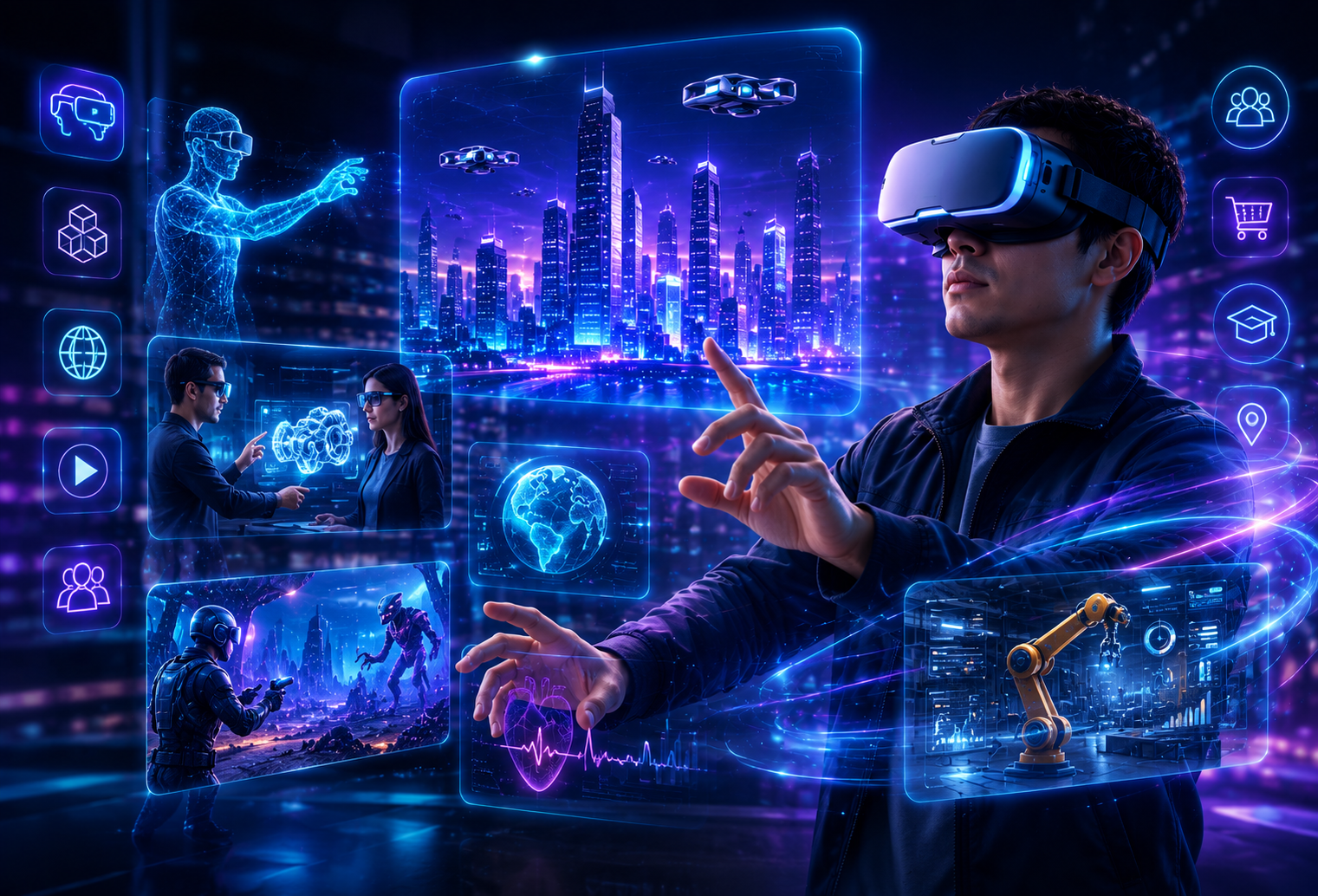
Virtual Reality (VR) and Augmented Reality (AR) are entering a transformative new phase, moving beyond gaming and entertainment into everyday life. Advances in hardware, including lighter headsets, higher-resolution displays, and improved battery life, are making immersive experiences more accessible than ever before.
One of the most significant developments is the integration of Artificial Intelligence with VR and AR platforms. AI-powered systems can better understand user behavior, recognize objects in real time, and create more natural interactions within virtual spaces. This combination enables personalized experiences, smarter virtual assistants, and realistic digital environments that respond dynamically to users’ actions.
Looking ahead, the next big leap for VR and AR will be the creation of seamless mixed-reality ecosystems that connect people, devices, and information in real time. As hardware becomes more affordable and software more sophisticated, these technologies are expected to become a regular part of daily life. The future of VR and AR is not just about entertainment—it is about redefining how we work, learn, communicate, and interact with the world around us.
Industries such as healthcare, education, manufacturing, and retail are already benefiting from these innovations. Surgeons can practice complex procedures in virtual simulations, students can explore interactive learning environments, and businesses can provide immersive training experiences for employees.